


Soosan Hometech
HomeResourcesTechnical
Technical

LPG vs Natural Gas: Detection Differences Explained

Understanding sensor selectivity is critical when specifying gas detectors for your application.

4 min read February 2026 Soosan Hometech Editorial

Using an LPG detector in a natural gas environment - or vice versa - can result in missed detections. This technical guide explains why, and how to specify the right sensor for each application.

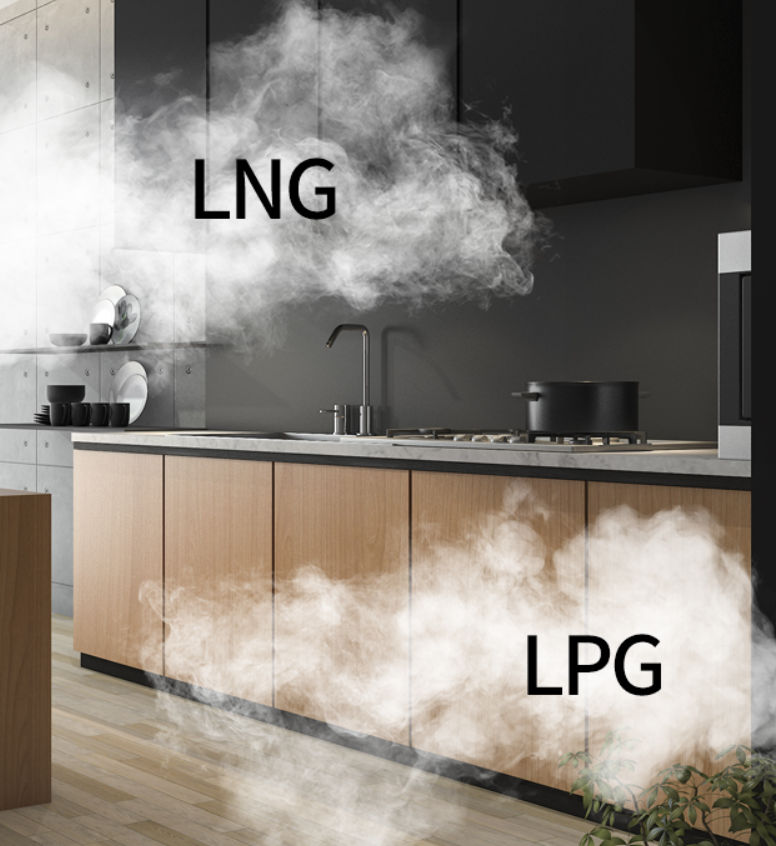
The Fundamental Difference: Density

The most critical physical difference between LPG and natural gas is their density relative to air:

LPG (Propane / Butane)
1.5-2.0×
heavier than air - sinks to floor level
→ Detector placed 30cm from floor
Natural Gas (Methane)
0.55×
lighter than air - rises to ceiling
→ Detector placed 30cm from ceiling

This single physical property determines where your detector must be mounted. An LPG detector installed at ceiling height will never detect a leak accumulating at floor level, even as dangerous concentrations build up.

Sensor Technology and Selectivity

Most residential and commercial gas detectors use catalytic bead (pellistor) or semiconductor sensors. Both types can be calibrated for either LPG or natural gas, but they are not interchangeable without recalibration.

  • Catalytic bead sensors
    Highly accurate, stable over time, used in professional-grade detectors. Require calibration for target gas. Standard in KGS-certified equipment.
  • Semiconductor sensors
    Lower cost, suitable for residential applications. Can show cross-sensitivity to other gases (alcohol, paint fumes). Calibration for target gas is still required.
  • Infrared (NDIR) sensors
    Not affected by poisons or humidity. Used in industrial applications. More expensive but offers high accuracy for hydrocarbon gases.

LEL Values Compared

LEL (Lower Explosive Limit) values differ between gases, which affects sensor calibration and alarm thresholds:

GasLEL (%vol)UEL (%vol)Density vs Air
Propane (LPG)2.1%9.5%Heavier (1.56)
Butane (LPG)1.8%8.4%Heavier (2.07)
Methane (NG)5.0%15%Lighter (0.55)
CO12.5%74%Slightly lighter (0.97)

Installation Placement Rules

LPG Detector Placement
  • Mount 30cm from floor
  • Avoid corners where gas pools
  • Do not place behind appliances
  • Minimum 1.5m from ignition sources
Natural Gas Detector Placement
  • Mount 30cm from ceiling
  • Near gas appliances (1-4m range)
  • Avoid ventilation outlets
  • Away from steam and cooking vapors

Which Soosan Product is Right?

Soosan Hometech manufactures detectors calibrated for both LPG and natural gas applications. When ordering, always specify your gas type - all models are available in LPG or NG variants.

Need help specifying?

Our team can specify the right detector for your environment

Tell us your gas type, application, and target market - we'll recommend the right model and certification path.

MORE ARTICLES